Our Resurrection Response
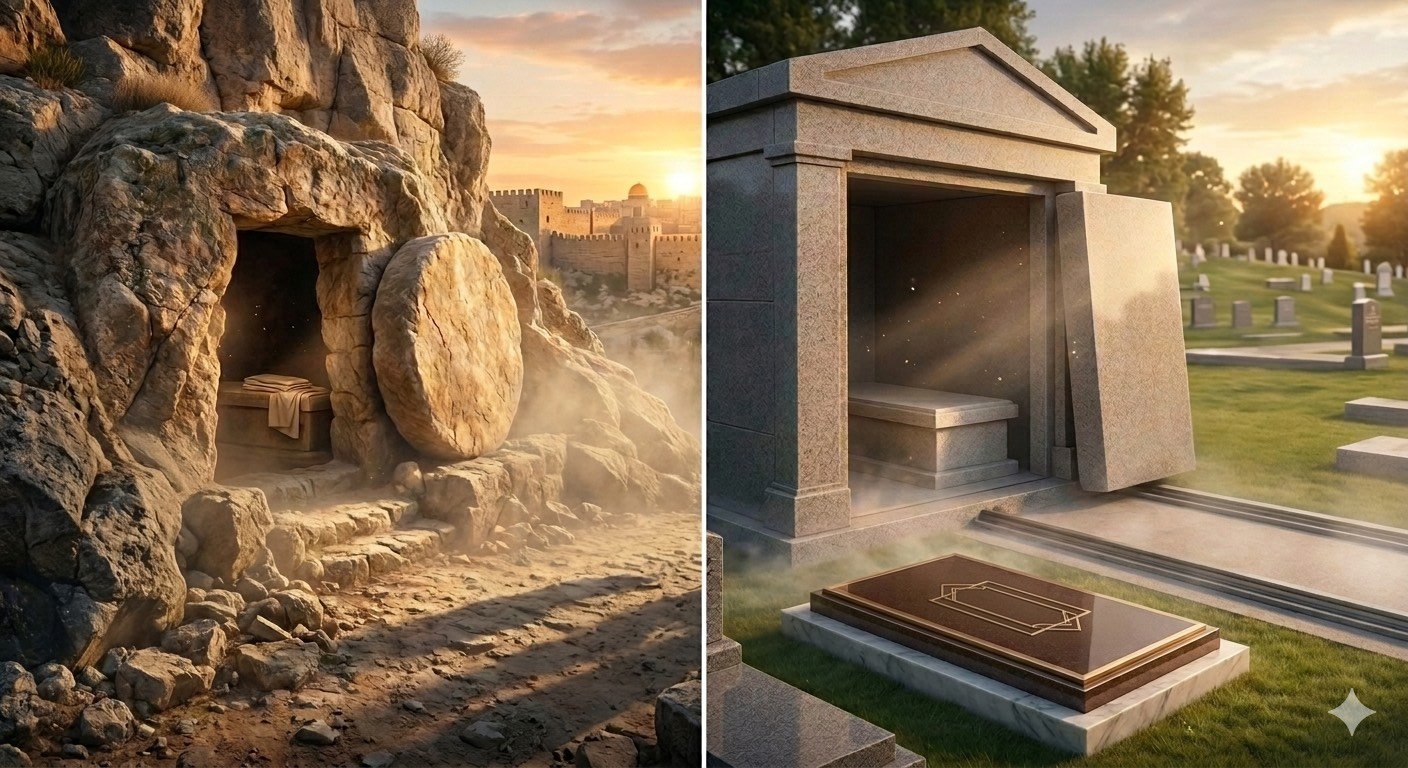
Theme: Jesus Christ’s resurrection and our coming resurrection inspire us every day.
Text: 1 Corinthians 15:58 to 16:3
Here’s a thought: Martin Luther declared, “There are two days in my calendar: This day and that Day.”
On one occasion, Michelangelo (1475-1564), the great artist, turned on his fellow artists in a spirit of indignation. He said, “Why do you keep filling gallery after gallery with endless pictures on the one theme of Christ in weakness, Christ on the Cross, and most of all, Christ hanging dead? Why do you concentrate on the passing episode as if it were the last work, as if the curtain dropped on Him with disaster and defeat? That dreadful scene lasted … a few hours. But to the unending eternity, Christ is alive; the stone has been rolled away, and He rules and reigns and triumphs!”
The Apostle Paul starts 1 Corinthians chapter 15 by describing the resurrection of Jesus and how He appeared to more than 500 people, including Paul himself. The eyewitness accounts and historical evidence provide ample proof that the tomb is empty and that Jesus is alive and well!
Paul goes on to explain why the resurrection of Jesus Christ is so important. If Christ was not raised, Paul reasons, then we followers of Jesus are to be pitied more than all men because we have been deceived or mistaken and our lives have been wasted (15:19). Paul adds that if the dead are not raised, let us eat and drink for tomorrow we die (15:32).
Paul demonstrated throughout his life and in his execution as a faithful servant of Jesus that he was thoroughly convinced that Christ had been raised and that a resurrection was coming for all who believed in and followed Jesus. Paul’s example showed us how we should respond to the resurrection.
Paul’s words tell us how we should respond in 1 Corinthians 15:58-16:3:
58 Therefore, my dear brothers, stand firm. Let nothing move you. Always give yourselves fully to the work of the Lord, because you know that your labour in the Lord is not in vain. 16:1 Now about the collection for God's people: Do what I told the Galatian churches to do. 2 On the first day of every week, each one of you should set aside a sum of money in keeping with his income, saving it up, so that when I come no collections will have to be made. 3 Then, when I arrive, I will give letters of introduction to the men you approve and send them with your gift to Jerusalem. NIV
This passage inspires me! When I read this, I am motivated and encouraged to press into all that the Lord has for me. I pray that it will do the same for you.
Resurrection calls us to:
Stand Firm
Work Hard
Give Much
Stand Firm
When we see the word “therefore” in the Bible, we need to ask what it’s there for. In response to Christ’s resurrection and our coming resurrection, we are to stand firm. “Stand firm” means to stay steady and not give in, especially when we’re under pressure. In everyday English, it can mean refusing to change your decision or beliefs; in a biblical sense, it often means remaining faithful and unwavering in our commitments and convictions.
The Lord had demonstrated His power over the gods of Egypt and led the Israelites out of the nation. He directed them to set up camp in the desert by the Red Sea, in a spot where they would be trapped if Pharaoh and the Egyptians changed their minds and pursued them. Have you ever felt like you are stuck between the desert and the Red Sea, or you might say “a rock and a hard place”? This could be the very spot where the Lord shows His power and provision.
Let’s see what happens in Exodus 14:5-14:
5 When the king of Egypt was told that the people had fled, Pharaoh and his officials changed their minds about them and said, “What have we done? We have let the Israelites go and have lost their services!” 6 So he had his chariot made ready and took his army with him. 7 He took six hundred of the best chariots, along with all the other chariots of Egypt, with officers over all of them. 8 The LORD hardened the heart of Pharaoh king of Egypt, so that he pursued the Israelites, who were marching out boldly. 9 The Egyptians - all Pharaoh's horses and chariots, horsemen and troops - pursued the Israelites and overtook them as they camped by the sea near Pi Hahiroth, opposite Baal Zephon. 10 As Pharaoh approached, the Israelites looked up, and there were the Egyptians, marching after them. They were terrified and cried out to the LORD. 11 They said to Moses, “Was it because there were no graves in Egypt that you brought us to the desert to die? What have you done to us by bringing us out of Egypt? 12 Didn't we say to you in Egypt, ‘Leave us alone; let us serve the Egyptians’? It would have been better for us to serve the Egyptians than to die in the desert!” 13 Moses answered the people, “Do not be afraid. Stand firm, and you will see the deliverance the LORD will bring you today. The Egyptians you see today you will never see again. 14 The LORD will fight for you; you need only to be still.” NIV
The Lord tells Moses and the Israelites not to panic or complain but to be still, stand firm and see the deliverance He would bring them that day, in that defining moment for generations to look back upon and be encouraged and emboldened when they face obstacles and enemies.
Similarly, we are to look back upon Christ’s resurrection, look ahead to our coming resurrection, and stand firm. We are called to let nothing move us because of the eternal hope we have in Him. When their rabbi was humiliated and crucified, His followers thought it was over. Some panicked and fled. Others mourned. Still others went back to their old lives and wondered if they had wasted the last three years. When they saw their resurrected Lord, everything changed and began to make sense. When the Holy Spirit was poured out on the Day of Pentecost in Acts chapter two, they were filled with power and courageous to testify of Him in Jerusalem, Judea, Samaria and the ends of the earth. They did not need to retreat! They could stand firm! They could move forward in His name!
Does it feel like you are under attack? Do you wonder how much longer you can resist the pressures of life? If yes, the Lord wants to tell you to stand firm.
Resurrection calls us to:
Stand Firm
Work Hard
We don’t work hard to earn resurrection to eternal life. We work hard because we have resurrection to eternal life by grace through faith in Jesus Christ. We are not saved by works. We are saved for works (Ephesians 2:8-10). As our salvation is made possible by the synergy or cooperation of the Holy Spirit and our wills, so is the work we do that has eternal value. The Bible doesn’t teach us to accept Him as our Lord and Saviour, then go and do our own thing. Fruitful work is accomplished not by our own decisions and discipline, but by abiding or remaining in Jesus as a branch remains in the vine (John 15:1-5).
Note that Paul does not say in 1 Corinthians 15:58 that we labour for the Lord, but that we labour in the Lord.
Paul describes it this way in Colossians 1:28-29:
28 We proclaim him [Jesus], admonishing and teaching everyone with all wisdom, so that we may present everyone perfect in Christ. 29 To this end I labour, struggling with all his energy, which so powerfully works in me. NIV
Someone has observed, “Retirement kills more people than hard work ever did.”
I am not advocating for workaholism. We must all find the rhythm of work and rest so we will thrive over the long haul. We don’t honour the Lord by teetering on the edge of burnout and exhaustion and neglecting our families. However, we must live and work with the same kind of urgency, seriousness and diligence that Jesus expresses in John 9:4, “As long as it is day, we must do the work of him who sent me. Night is coming, when no one can work.” NIV
William Carey began as a poor, self-taught shoemaker in England. He was known for his ability to “plod” day in and day out. Most people in the 1700s gave little thought to the world beyond their village, but Carey spent his workdays with a handmade leather map on his wall, meticulously jotting down facts about every country, tribe, and religion he could find. He taught himself Greek, Hebrew, Latin, and Italian while literally stitching shoes.
When he finally reached India in 1793, his “plodding” was put to the ultimate test. It took seven years of exhausting work before he baptized his first Indian convert, Krishna Pal. During those years, his son died of dysentery, and his wife, Dorothy, suffered a mental breakdown from which she never recovered. Most people would have quit, but Carey continued to study and translate every single day.
Carey’s life’s work was translation. In 1812, a massive fire ripped through his printing shop in Serampore, India. In one night, the flames consumed ten Bible translations in progress, his massive Sanskrit dictionary, sets of specially cast metal type for his printing press, and irreplaceable manuscripts and grammar books.
When Carey walked through the ashes the next morning, he didn’t weep or give up. He simply said, “The loss is heavy, but as travelling a road the second time is usually done with greater ease than the first, so I trust the work will lose nothing of real value.” He sat down at a new desk and started over from the very first page.
By the time he died in 1834, Carey had spent 41 years in India without a single furlough or vacation. His “plodding” resulted in the Bible being translated into 40 different Indian languages and dialects, the founding of Serampore College, and the successful legal campaign to ban sati (suh-tee’, the burning of widows). Carey proved that brilliance isn't always about a flash of genius; sometimes, it's just the determination to keep working.
The Lord has daily assignments for each of us. We set about fulfilling His tasks by being yoked with Him, much like a younger, inexperienced ox is paired up with an older, experienced one to learn and grow while they work together in the field. We enter this partnership from a position of rest rather than striving and straining to earn approval and results. His yoke is easy, and His burden is light (Matthew 11:28-30) while He does His work, and we faithfully do our part – praying and obeying.
What is the Lord asking you to do? If you aren’t sure, then search for general directions in the Bible and start following them. If you are sure, give yourself fully to the work of the Lord, knowing that your labour is not in vain.
Resurrection calls us to:
Stand Firm
Work Hard
Give Much
Keep in mind that Paul and his scribe did not include chapters and verses when Paul dictated his first letter to the church in Corinth. Chapter divisions were added much later, in the early 13th century. Verse numbers came even later, in the 15th and 16th centuries. The Geneva Bible, published in 1560, was the first English translation to use both the modern chapter and verse divisions throughout the entire text.
I point this out because we tend to think that Paul begins a different topic in chapter 16, unrelated to his discussion of Christ’s resurrection and our coming resurrection in chapter 15. The resurrection impacts everything – including our wallets. Christ’s resurrection and our coming resurrection call us to give much.
One church had this on the sign in front of their building: “When it comes to giving, some people stop at nothing.”
People in the church in Jerusalem were struggling, and Paul was collecting money from churches in other cities to share with their brothers and sisters in need. Paul teaches here that followers of Jesus should give generously, in keeping with their income, so that God’s work is well supported and people’s needs are met. We are called to do likewise. If we refuse to support the Lord’s work in and through the church, we ignore the reality of Christ’s resurrection and our own coming resurrection. I will be as truthful and gracious as I can be. If we refuse to pool our money and withhold sharing the finances He has entrusted to us, we are disobeying Him. If we are disobeying Him, we need to repent (ask forgiveness and change our ways) and obey Him.
Paul later explains in 2 Corinthians 9:6-8:
6 Remember this: Whoever sows sparingly will also reap sparingly, and whoever sows generously will also reap generously. 7 Each man should give what he has decided in his heart to give, not reluctantly or under compulsion, for God loves a cheerful giver. 8 And God is able to make all grace abound to you, so that in all things at all times, having all that you need, you will abound in every good work. NIV
Paul goes on to say in 2 Corinthians 9 that the Lord wants to bless us financially so we can be generous and bless others financially. We don’t give to get rich, but we give because we are rich.
You might say our lives here on earth are like springtime, when a farmer or gardener decides if or what and how much he should plant. Will he decide not to plant? If so, there will be no harvest in the fall – just weeds. Will he decide to sow wheat or barley in the spring? He will reap what he sows. Will he decide to plant a little or a lot? The harvest in the fall will be in direct proportion to how much he planted in the spring.
Martin Luther (1483-1546) declared, “There are two days in my calendar: This day and that Day.” Each day matters, but this present life is not the whole story. “This day” refers to the here and now; “that day” refers to the day when we are resurrected and stand before God. Our lives are made up of days, weeks, months and years strung together. Will we live with eternity’s values in view? The choice is ours.
Resurrection calls us to:
Stand Firm
Work Hard
Give Much
Jesus Christ’s resurrection and our coming resurrection inspire us every day.